
Odoo ERP for Manufacturing and Warehousing: Connecting Inventory, Accounting, Sales, and Operations
See how Odoo ERP connects inventory, sales, purchasing, accounting, manufacturing, warehousing, and reporting for growing operations.

Manufacturing and warehousing teams run on coordination. Sales needs to know what can be delivered. Purchasing needs to know what must be replenished. Finance needs accurate costs and invoices. Warehouse teams need clear receiving, picking, packing, and delivery workflows. Leadership needs reporting that reflects what is actually happening across the operation.
When these functions are spread across disconnected systems, the business loses visibility. Inventory data becomes uncertain. Production planning depends on manual updates. Accounting waits on operational information. Customers receive slower answers. For Ohio manufacturers, distributors, warehouse operators, and industrial suppliers, these gaps can directly affect margins, delivery performance, and growth.
Odoo ERP gives manufacturing and warehousing businesses a connected platform for inventory, sales, purchasing, accounting, manufacturing, and reporting. This article explains the operational problems Odoo can help solve, the modules that matter most, and the implementation considerations leaders should evaluate before starting an ERP project.
Why Manufacturing and Warehousing Teams Need Connected Systems
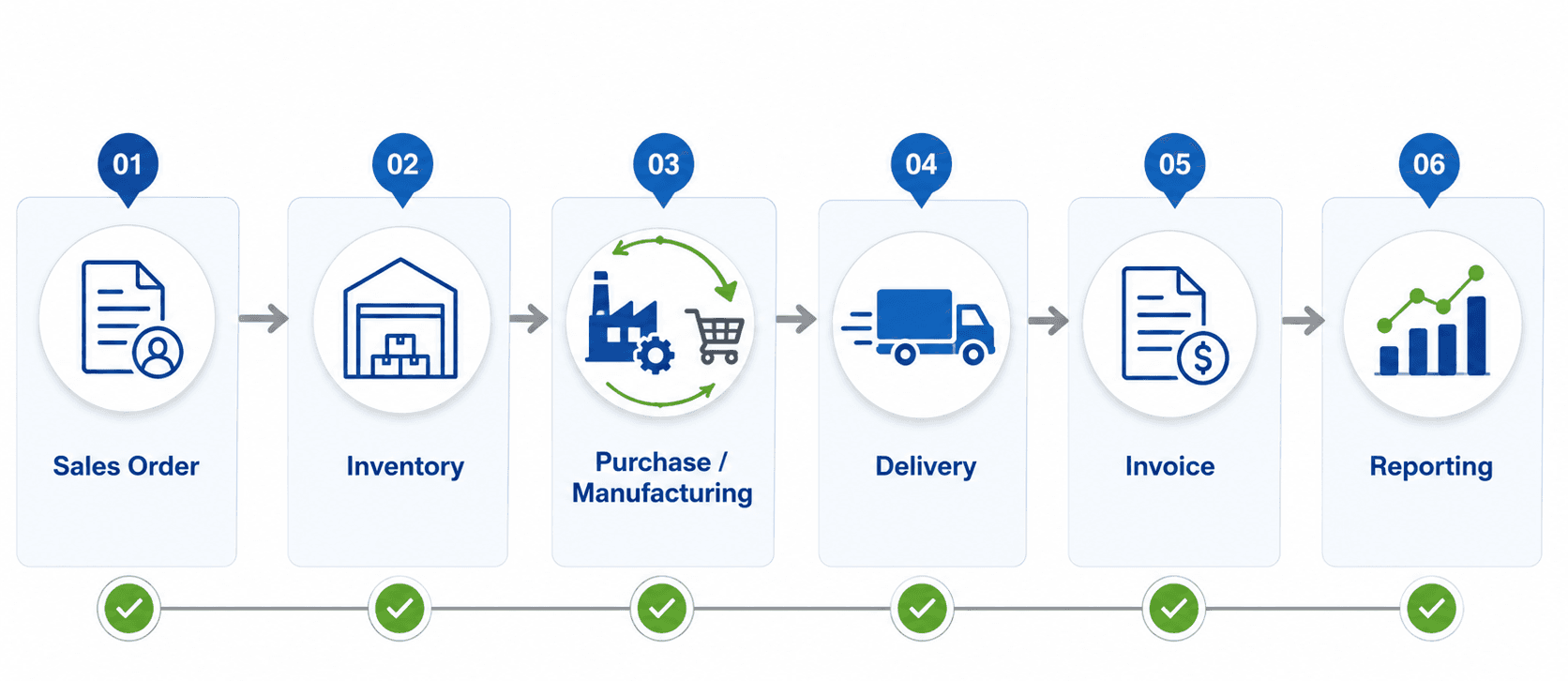
Manufacturing and warehousing workflows cross department boundaries. A sales order may trigger inventory allocation, purchasing, production, quality checks, delivery, invoicing, and management reporting. If each step lives in a different system, the business depends on people to manually bridge the gaps.
That manual coordination creates risk. A small inventory mismatch can lead to an inaccurate customer promise. A late purchasing update can delay production. A missing cost detail can distort margin reporting. Connected systems reduce those handoff risks by allowing teams to work from shared records and standardized workflows.
Common Operational Problems Odoo ERP Can Address
Many operations do not need more data. They need better-connected data. The most common problems appear when teams cannot trust the information they already have or cannot access it fast enough to make decisions.
- Inventory counts differ between spreadsheets, warehouse systems, and sales conversations.
- Purchasing decisions depend on manual checks rather than structured replenishment rules.
- Production planning is slowed by unclear component availability or work order status.
- Accounting spends too much time reconciling orders, invoices, and operational data.
- Leadership lacks real-time visibility into stock, margin, fulfillment, and performance.
Odoo Modules Relevant to Manufacturing and Warehousing
Odoo is modular, which is one reason it works well for growing operations. A company can begin with the modules that address the highest-priority workflows and add more capabilities as the operation matures.
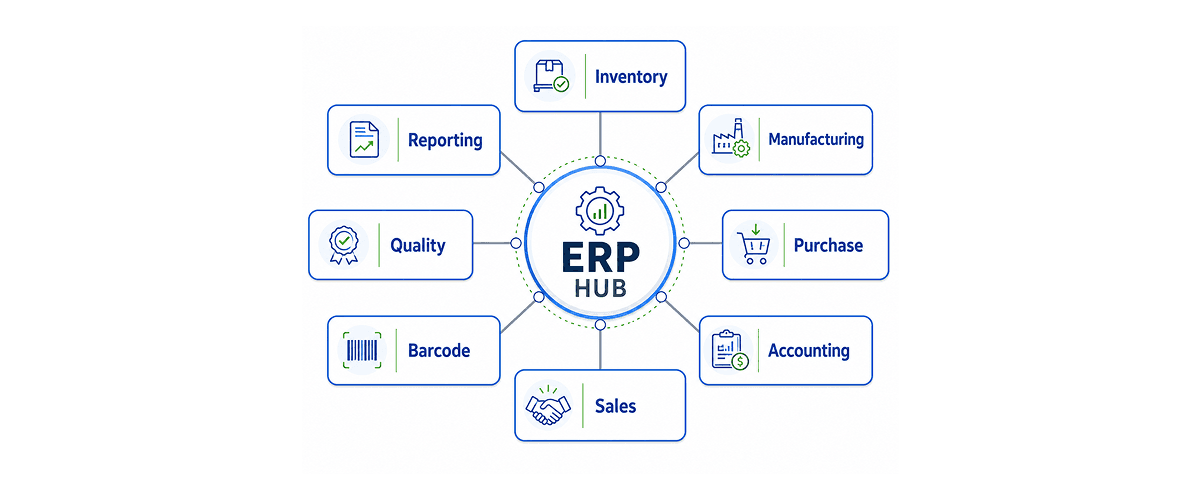
For manufacturing and warehousing, the most relevant modules often include Inventory, Manufacturing, Purchase, Sales, Accounting, CRM, Quality, Maintenance, Barcode, eCommerce, and Reporting. The exact mix depends on the business model, number of locations, product complexity, and reporting requirements.
| Odoo module | How it helps |
|---|---|
| Inventory | Manage stock levels, warehouses, transfers, replenishment, and product movement. |
| Manufacturing | Support bills of materials, work orders, production planning, and routing needs. |
| Purchase | Coordinate vendor orders, receiving, replenishment, and supplier visibility. |
| Sales and CRM | Connect opportunities, quotations, orders, and customer records. |
| Accounting | Link invoices, bills, payments, and financial reporting to operations. |
| Barcode | Improve warehouse execution through scanning for receiving, picking, and transfers. |
How Sales, Inventory, Accounting, Purchasing, and Reporting Connect
In a connected Odoo workflow, sales activity can flow into quotes and orders. Inventory availability can inform what the sales team promises. Purchasing can respond to replenishment needs. Manufacturing can plan production around bills of materials, components, and work orders. Accounting can receive cleaner invoice and cost data. Leadership can monitor performance through dashboards instead of waiting for manual spreadsheet reports.
The value is not simply that these modules exist. The value comes from designing the workflow so each department contributes to a single operational picture.
Implementation Considerations for Ohio Manufacturers and Distributors
Manufacturing and warehousing implementations require practical planning. Teams should document how materials move, how products are received and shipped, how stock is counted, how costs are calculated, and which reports leadership uses to run the business.
Ohio businesses may also need to consider multi-warehouse coordination, supplier lead times, customer delivery expectations, manufacturing workflows, industry compliance requirements, and integration with eCommerce, shipping, or accounting tools. These details should be understood before configuration begins.
- Start with process mapping before selecting modules or customizations.
- Clean product, vendor, customer, inventory, and accounting data before migration.
- Define user roles for warehouse, production, finance, sales, and leadership teams.
- Test with realistic orders, returns, replenishment scenarios, and reporting needs.
- Plan post-launch support so teams can refine workflows after real usage begins.
Why eBusiness Inc. Is a Fit for ERP and Technical Delivery
ERP implementation is both a business process project and a technical delivery project. eBusiness Inc. can support the advisory, implementation, customization, integration, migration, training, and post-launch optimization work required to make Odoo practical for real operational teams.
For manufacturing and warehousing businesses, that means translating operational reality into workflows that users can follow, managers can trust, and leaders can scale.
Final Thoughts
Manufacturing and warehousing businesses cannot afford poor visibility between sales, inventory, purchasing, operations, and accounting. The more the business grows, the more expensive disconnected systems become.
Odoo ERP offers a flexible way to connect critical workflows and build a stronger operational foundation. If your manufacturing or warehousing operation is ready to improve visibility and reduce manual coordination, eBusiness Inc. can help plan the right implementation path.
Ready to explore Odoo ERP?
Talk with eBusiness Solutions about Odoo implementation, customization, migration, integration, and long-term support.
Book an Odoo ERP ConsultationFrequently Asked Questions
Is Odoo ERP good for manufacturing?
Odoo can support manufacturing workflows such as bills of materials, work orders, production planning, inventory coordination, purchasing, and reporting.
Can Odoo help warehouse operations?
Yes. Odoo Inventory and related modules can help manage stock movement, replenishment, receiving, transfers, picking, and warehouse visibility.
Can Odoo connect inventory and accounting?
Odoo can connect operational records with invoicing, bills, payments, and financial reporting when configured correctly.
Do manufacturers need custom Odoo development?
Some manufacturers can use standard workflows, while others need customization for specialized processes, reports, integrations, or approval paths.
How should a manufacturing ERP implementation start?
It should begin with process mapping, module planning, data cleanup, workflow design, testing, training, and a realistic go-live plan.
Related Articles

Odoo ERP for Multi Location Service Businesses
See how a connected Odoo ERP setup can give multi-location service businesses clearer customer, scheduling, invoicing, and reporting workflows.

What to Know Before Moving Multiple Companies to Odoo
Learn what to share, what to keep separate, and how to plan an Odoo multi-company rollout around the way your businesses work.

How Odoo 19 AI Helps Teams Work Faster Without Losing Human Control
Learn how Odoo 19 AI can help operations, finance, and customer-facing teams work faster while people retain control of business decisions.