
Odoo ERP Case Study
From disconnected student systems to one scalable operating model
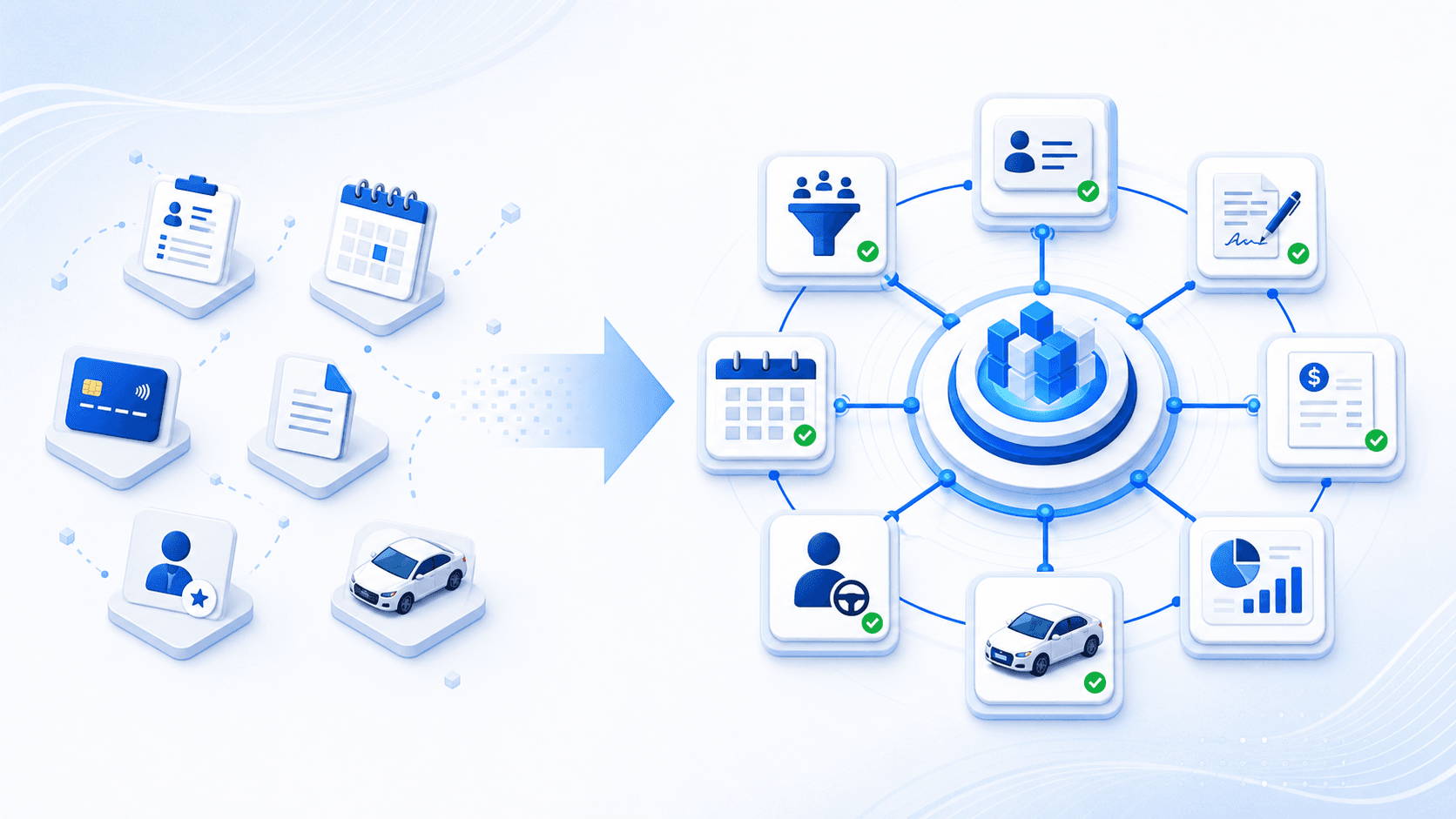
The proposed Odoo environment connects leads, registration, agreements, payments, lesson delivery, completion records, fleet tracking, and management reporting around one student record.
Client
Confidential Ohio driving school
Industry
Driver education and behind-the-wheel training
Service
Odoo ERP operating-model design and phased implementation planning
Location
Ohio, United States
The Challenge
Fragmented systems created handoffs, cost, and visibility gaps
The school had a working student-facing platform, but the information behind it was fragmented across its vendor tool, QuickBooks, ADP, email, files, and manual processes. Staff had to re-enter and reconcile information, while leadership lacked a complete view of students, financials, instructor compliance, fleet readiness, and capacity.
New-student information could need to be entered or updated in three to four different places, increasing administrative work and the risk of inconsistent records.
No single record connected enrollment, payments, documents, lesson hours, training progress, instructors, and completion status.
QuickBooks Self-Employed did not provide the required operational visibility for prepaid lesson revenue as lessons were delivered.
Instructor certifications, background checks, vehicle maintenance, insurance, registrations, and expiry dates were not centrally tracked.
6+
Daily systems in use
Student, finance, payroll, document, email, and manual processes needed a connected operational view.
300
Estimated students per year
A connected process was designed to support the school’s growing annual student volume.
14 weeks
Proposed roadmap
A phased implementation plan was outlined to connect, automate, centralize, report, and scale.
Module Mapping
Each legacy workflow was mapped to an Odoo module
The goal was to preserve critical capabilities while reducing manual handoffs, duplicate data entry, and inter-platform integration overhead.
| Legacy workflow | Odoo module | Impact |
|---|---|---|
| Lead sources and referrals | Odoo CRM | BMV referrals, website enquiries, word-of-mouth leads, and social leads can be tracked in one conversion pipeline. |
| Student, parent, instructor, and partner records | Odoo Contacts | The organization gains a centralized relationship record for the people and partners involved in every student journey. |
| Training-service enrolment and payments | Odoo Sales, Invoicing, and Accounting | Agreements, invoices, payments, receivables, and lesson-based revenue reporting can follow the same operational record. |
| Permits, waivers, agreements, and certificates | Odoo Sign and Documents | Student documents can be requested, signed, stored, and retrieved without an email-and-files handoff. |
| Scheduling, instructor readiness, and vehicle tracking | Odoo Appointments, Planning, Employees, and Fleet | Lesson availability, instructor compliance, vehicle maintenance, and related expiration dates can be managed in a connected operating workflow. |
Implementation Methodology
Phased delivery from discovery to long-term support
The approach balances speed and risk: understand the current state, map features to Odoo, define an MVP, then expand after the foundation is live and stable.
- 1
Connect
Discovery and student-journey mapping
Document every handoff across registration, payment, lessons, documents, instructors, vehicles, finance, and completion.
Deliverable: Current-state workflow and data map
- 2
Automate
Event-based reminders and follow-up
Design automations for lead responses, agreements, payment confirmation, lesson reminders, progress updates, certificates, and review requests.
Deliverable: Automation and communications plan
- 3
Centralize
Odoo module configuration
Configure the foundational CRM, contacts, sales, invoicing, accounting, sign, and document workflows around the primary student record.
Deliverable: Connected operational MVP
- 4
Report
Management visibility and operational controls
Build dashboards and processes for financial tracking, capacity, instructor readiness, fleet status, and training progress.
Deliverable: Management dashboard and control framework
- 5
Scale
Repeatable multi-school blueprint
Prepare the operating model for a future second school, with multi-company evaluation only when expansion makes it necessary.
Deliverable: Expansion-readiness blueprint
Expected Outcomes
A clearer operating model for growth
The proposed Odoo end state connects the people, processes, and reporting needed to run the business with greater confidence.
One connected operational record from enquiry through training completion.
Less duplicate data entry across student, financial, document, and scheduling workflows.
Automated reminders, certificates, and follow-up activities based on business events.
A scalable operating template for future independently operated schools.
Case Study FAQ
Common questions about this Odoo operating model
Was this a completed Odoo implementation?
This case study documents the proposed operating model and implementation roadmap. The outcomes shown are target outcomes from the planning phase, not guaranteed or post-implementation performance results.
Why not replace every system immediately?
The recommendation was to connect the systems that still delivered value and replace individual tools only when the operational or financial case justified doing so. This keeps the rollout focused and reduces unnecessary disruption.
How would Odoo support expansion to another school?
The foundational workflow is designed to be repeatable. When a second school is ready, Odoo can be evaluated for separate companies, books, brands, operations, and consolidated management reporting.
Ready to see what Odoo consolidation could look like for you?
We can review your current systems, map workflows to Odoo modules, and define a phased implementation plan for your business.